Terracotta Living Room Ideas: Warm Earthy Tones and Natural Textures

Terracotta is the color of sun-baked clay, and a terracotta living room feels warm the moment you walk in. It is a color with depth and history, drawn from pottery, desert landscapes, and Mediterranean homes, and it brings a natural warmth that grey and white rooms cannot match. Used well, terracotta makes a living room feel cozy, grounded, and timeless.
How much terracotta is enough
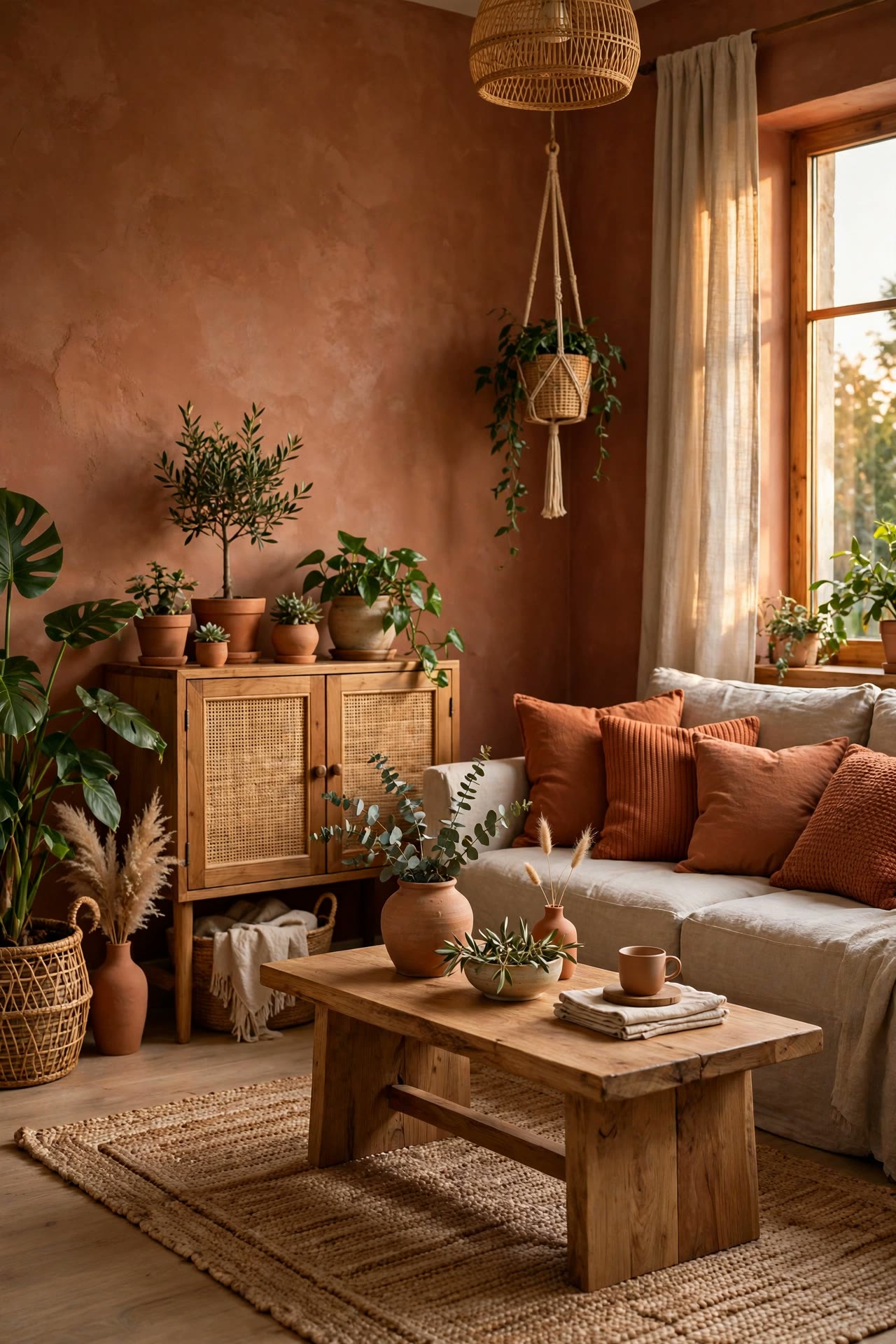
Terracotta is a strong color, and the right amount depends on the size and light of your room. In a small or dark room, use terracotta as an accent: cushions, throws, pots, and one piece of art, against a cream or warm white base. The room will feel warm without feeling smaller. In a large, bright room, you can go further: a terracotta feature wall, a terracotta rug, or a terracotta sofa, balanced by plenty of cream and wood. The rule of thumb is to let terracotta cover about a fifth to a third of what you see, and to repeat it at least three times so it reads as a scheme rather than a single object. A terracotta cushion, a terracotta pot, and a terracotta throw form a thread that the eye follows around the room.
Walls, textiles and pots
Terracotta works on three surfaces: walls, textiles, and pots, and each one gives a different effect. A terracotta wall is the boldest move, and it suits a feature wall behind a sofa or a fireplace, painted in a matte finish that absorbs light softly. A terracotta plaster or limewash finish adds subtle texture and movement, which suits the earthy character of the color. Keep the other walls cream or warm white so the feature wall stays the focus. Textiles are the easiest way to bring terracotta in: cushions in linen and wool, a throw in a woven texture, and curtains in a soft clay tone. Linen is the ideal terracotta fabric, because its matte texture and natural slub suit the earthy color.
Natural textures to pair
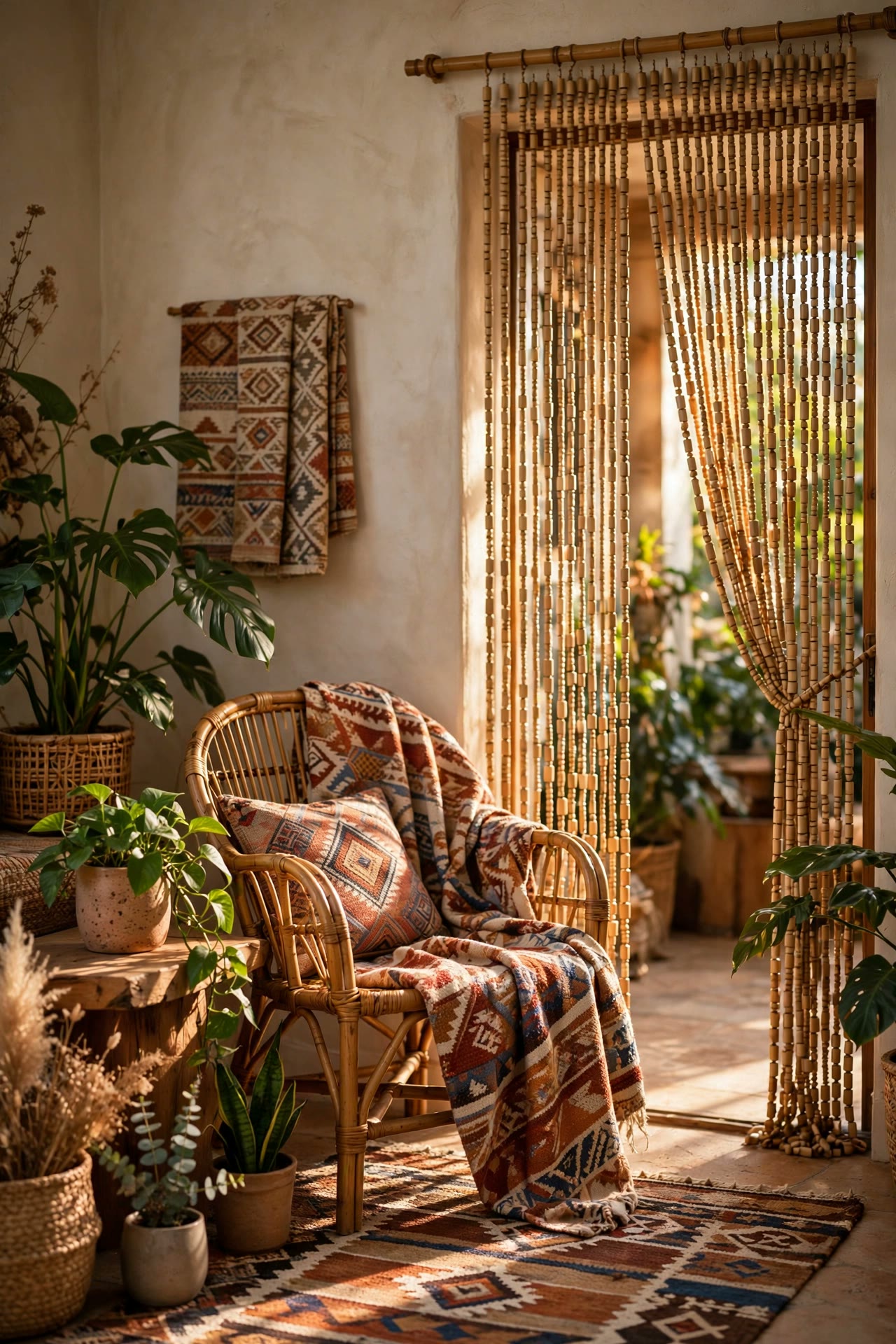
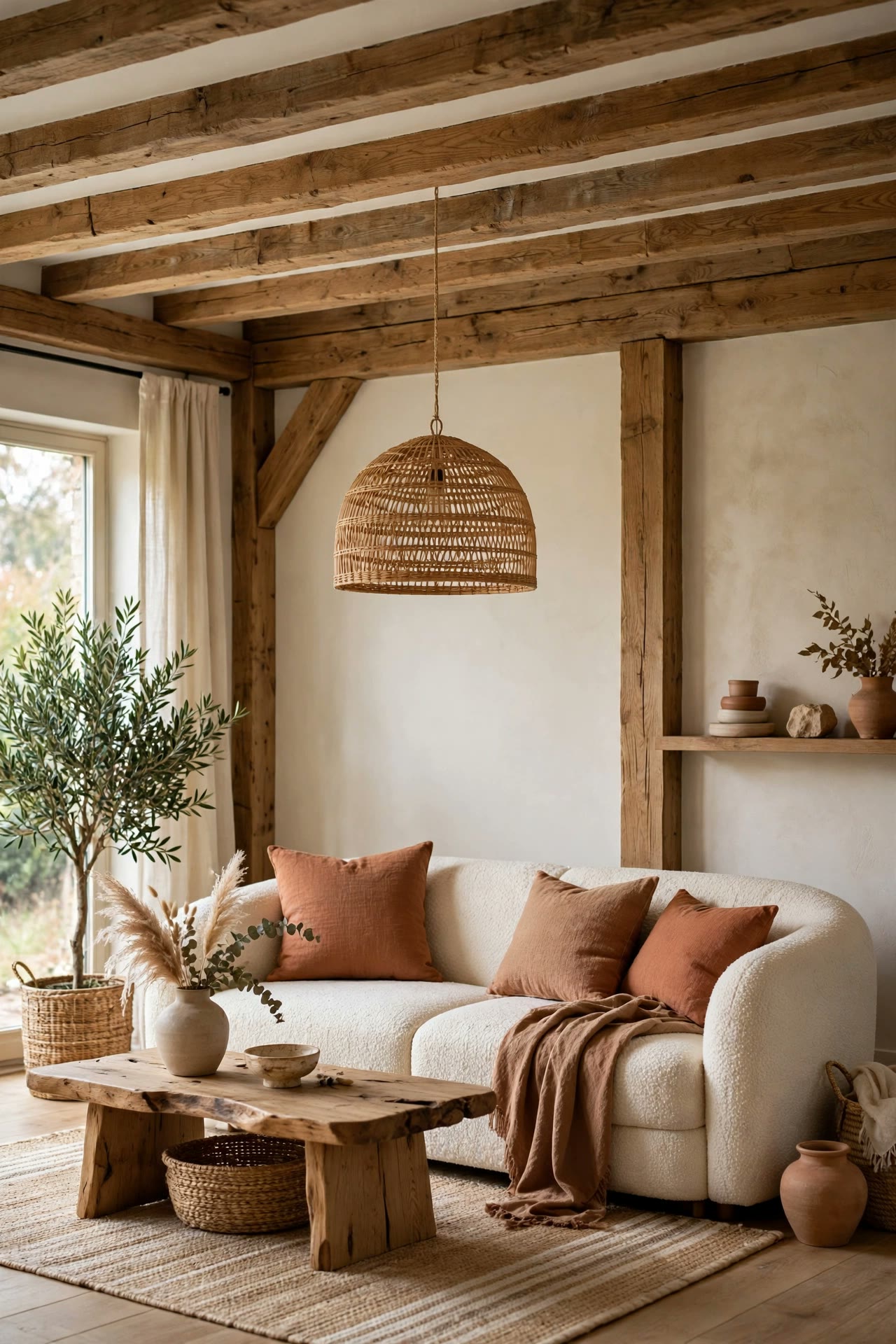
Terracotta needs natural textures around it, because the color is drawn from nature and synthetic materials clash with it. Linen, cotton, wool, jute, rattan, and raw wood are the core textures, and each one adds a different layer. A linen sofa in cream, a jute rug under the coffee table, a rattan basket for throws, and a wool throw over the sofa arm give the room a complete natural palette. Layer the textures by contrast: smooth against rough, soft against hard. A smooth ceramic vase beside a rough jute basket, a soft wool throw on a nubby linen sofa, a matte clay pot beside a glossy plant leaf. Avoid shiny or synthetic fabrics in a terracotta room, because they reflect light harshly and break the earthy spell.
Wood tones that work
Wood is terracotta’s best partner, and the right wood tone makes the color glow. Warm mid-tones work best: honey oak, warm walnut, and natural pine all sit beautifully against terracotta. The wood should be warm rather than grey, because grey-washed wood cools the terracotta down and makes the room feel muddy. A walnut coffee table, oak shelving, and a warm wood floor give the room a consistent warm base. Repeat the wood tone in at least two places, so the room feels connected: the coffee table and the shelving, the floor and the picture frames, or the side table and the plant stand. Keep the wood finishes natural or matte, rather than high-gloss, because a matte finish suits the earthy character of terracotta.
Seasonal swaps
Terracotta is a year-round color, but the way you use it can change with the seasons. In summer, pair terracotta with cream linen, green plants, and light textures, and keep the room airy with sheer curtains and open windows. In autumn and winter, layer in deeper tones: a wool throw in rust or ochre, heavier curtains, and warm lamplight that makes the terracotta glow. The color itself stays, and the layers around it change.
Swap the small things seasonally: cushion covers, throws, and the plants on display. A summer arrangement of terracotta pots with trailing green plants becomes a winter arrangement of terracotta pots with dried grasses and branches.
Concept image: AI-generated interior concept.