
A good reading corner starts with the right chair, and in a small home that choice matters more than anywhere else. A comfy reading chair for small spaces has to do two jobs at once: be a place you genuinely want to sit for an hour, and fit a corner without swallowing the room. You do not need a big room or a big budget. You need the right proportions, a little light, and a surface for your tea. This guide covers seven chair styles that work in tight corners, how to arrange them, and what to avoid when every square foot counts.
Why chair size matters in a small space
A standard armchair is often 35 to 40 inches wide, which sounds modest until you add the space needed to walk past it and stretch your legs. In a small room, a chair that is too deep pushes you into the middle of the floor and makes the whole room feel blocked. Look for a seat width of 26 to 32 inches and a depth under 34 inches. Armless chairs and slim track arms save several inches on each side, and a slightly higher back can feel supportive without adding bulk. Scale is also about sight lines. A chair with visible legs and open space underneath lets you see more floor, and a room where you can see the floor reads as bigger.
7 chairs that fit small corners
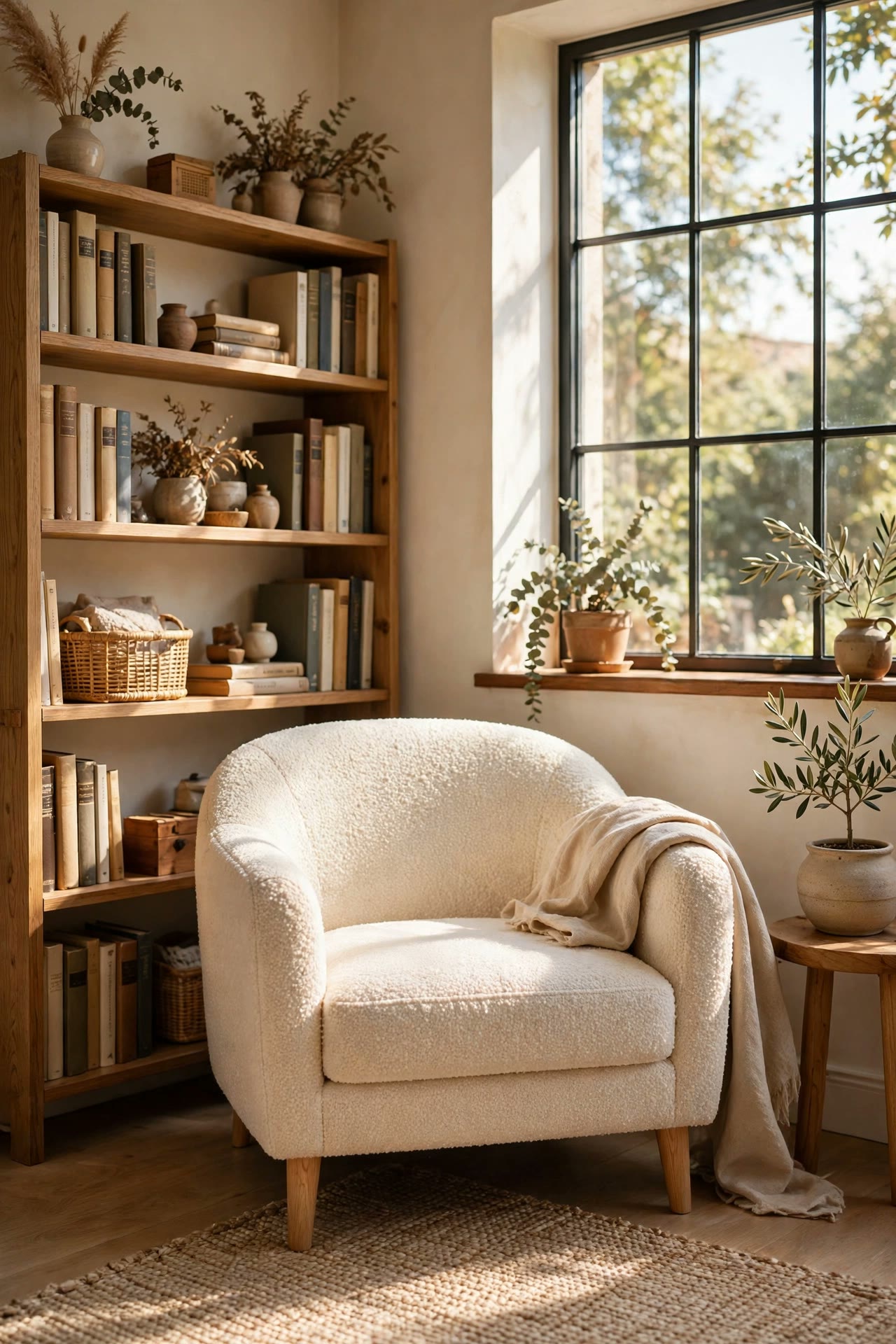
A compact boucle armchair is the classic small-space reading chair: soft texture, a rounded back, and usually a narrower frame than a traditional club chair. A swivel chair earns its place because you can turn toward the window for daylight and back toward the room in the evening, and many swivel bases are smaller than four-legged ones. A slipper chair, with no arms at all, tucks into the narrowest corner and slides under a console table when guests come over. A small-scale wing chair brings a cozy, enclosed feeling and shields you from drafts near a window, but check the wing width before you commit. A papasan-style round chair feels playful and generous, yet its wide bowl needs more floor than you expect, so save it for a corner with at least three feet of clear space.
Small-space layout: chair + light + side table
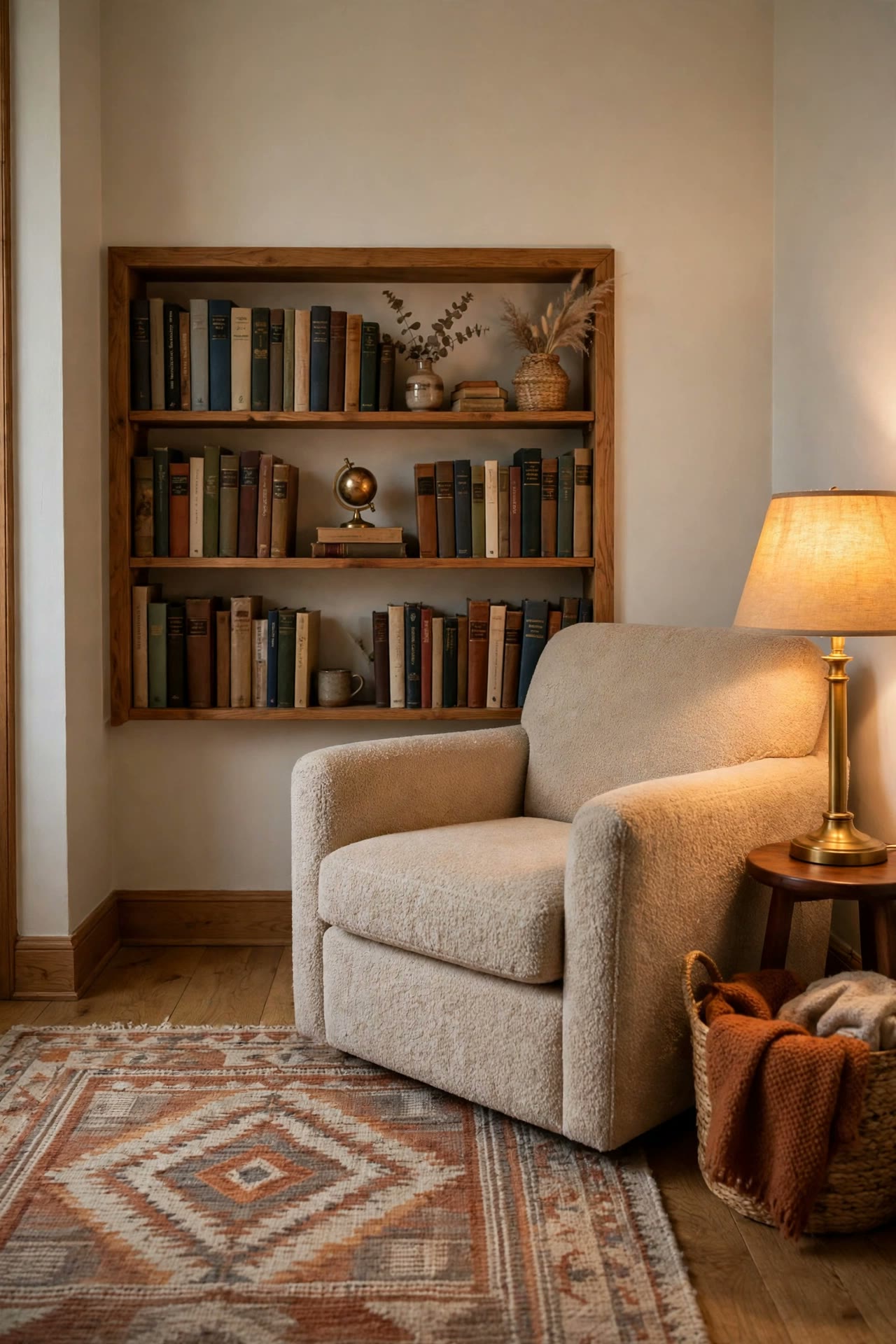
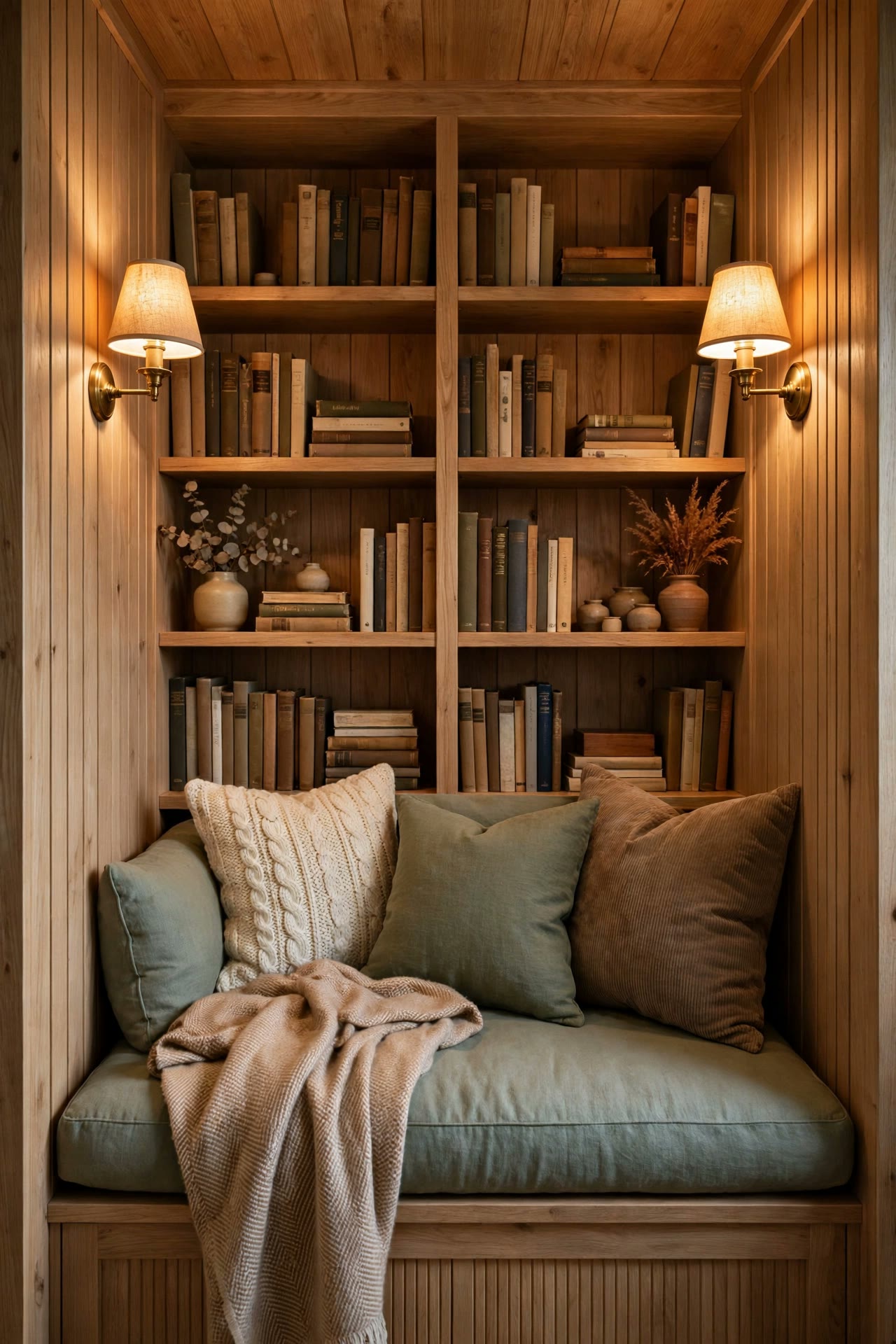
Every reading nook is really three pieces: the chair, the light, and a surface. Place the chair where the light falls during the hours you read most, usually near a window, and add a floor lamp or wall sconce behind the chair’s shoulder on your non-dominant side so your shadow never falls across the page. A warm bulb, around 2700K, keeps the corner restful in the evening. Your side table only needs to hold a book, a mug, and a phone. A small round table, a wall-mounted shelf, or a sturdy stack of books all work. Keep the table on the same side as the lamp so cords stay together and out of the walkway. Add a small rug under the chair to mark the nook as its own zone, extending a few inches beyond the chair on each side.
Renter-friendly nook swaps
Renters can build a real nook without drilling a single hole. A plug-in wall sconce or a slim floor lamp gives you the same layered light as a hardwired fixture. Adhesive hooks hold a hanging plant or a small shelf for your current book. A leaning bookshelf needs no wall fixing in most cases, and a freestanding bookcase placed at a right angle to the wall creates a divider that frames the nook. If your lease forbids painting, use textiles to create the cozy feeling instead: a warm curtain panel on a tension rod, a textured throw, and a rug in a deep tone will warm up white walls. When you move, the whole nook packs into a few boxes and nothing stays behind.
What to skip in a tiny room
Skip the matching ottoman if it blocks the walkway; a small footstool that slides under a table is better. Skip oversized floor cushions that migrate across the room and end up as clutter. Skip a chair with reclining mechanics unless you have the clearance behind it, since a recliner needs a foot or more of space to open. Skip dark, heavy fabrics in a room with one small window, because they absorb the light you are trying to read by. And skip buying the chair first: buy the lamp and the rug first, live with the empty corner for a week, and let the space tell you what size chair it actually wants.
A small room does not mean a small reading life. Choose a chair that fits the corner you have, give it good light and one flat surface, and keep everything else simple.
Concept image: AI-generated interior concept.