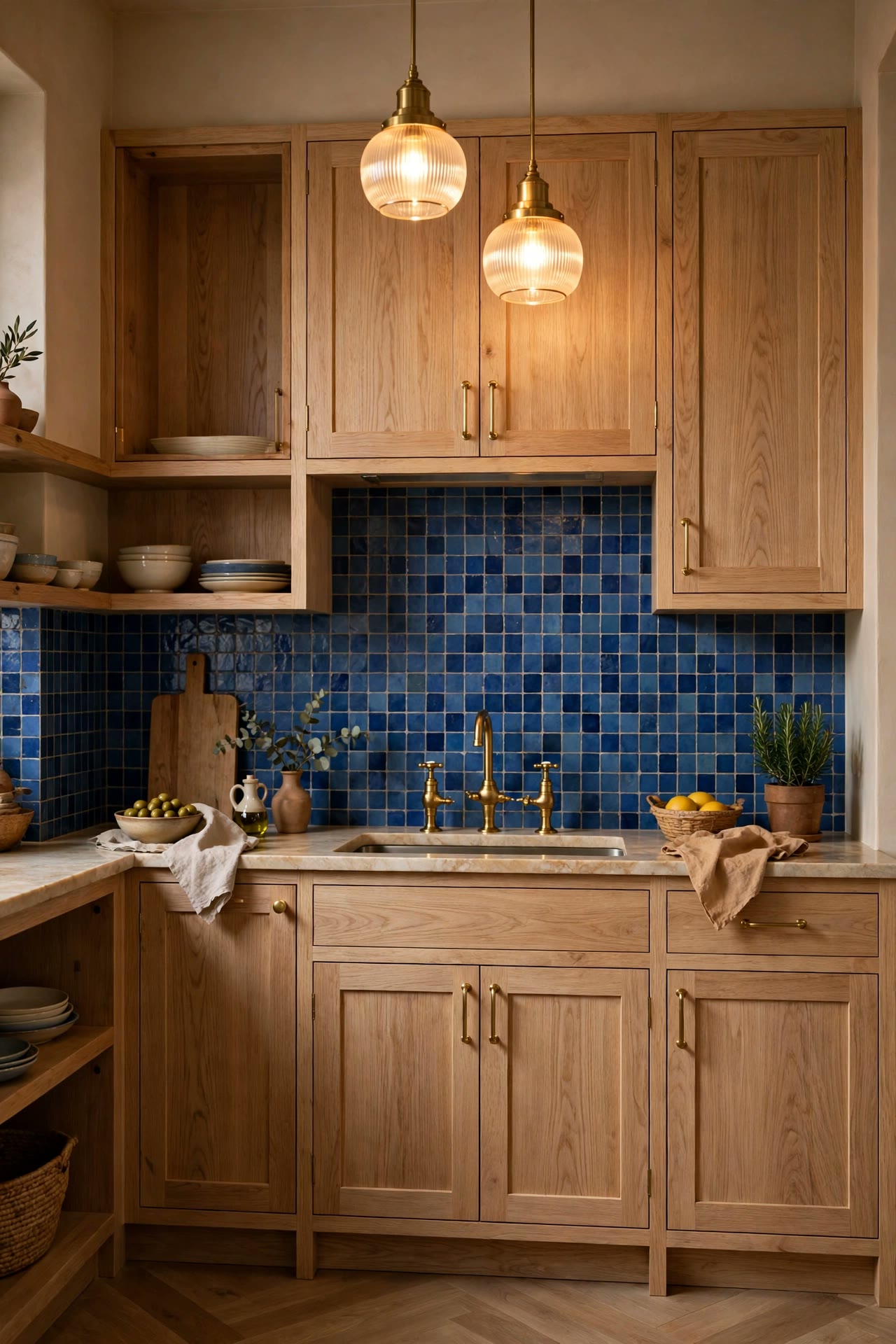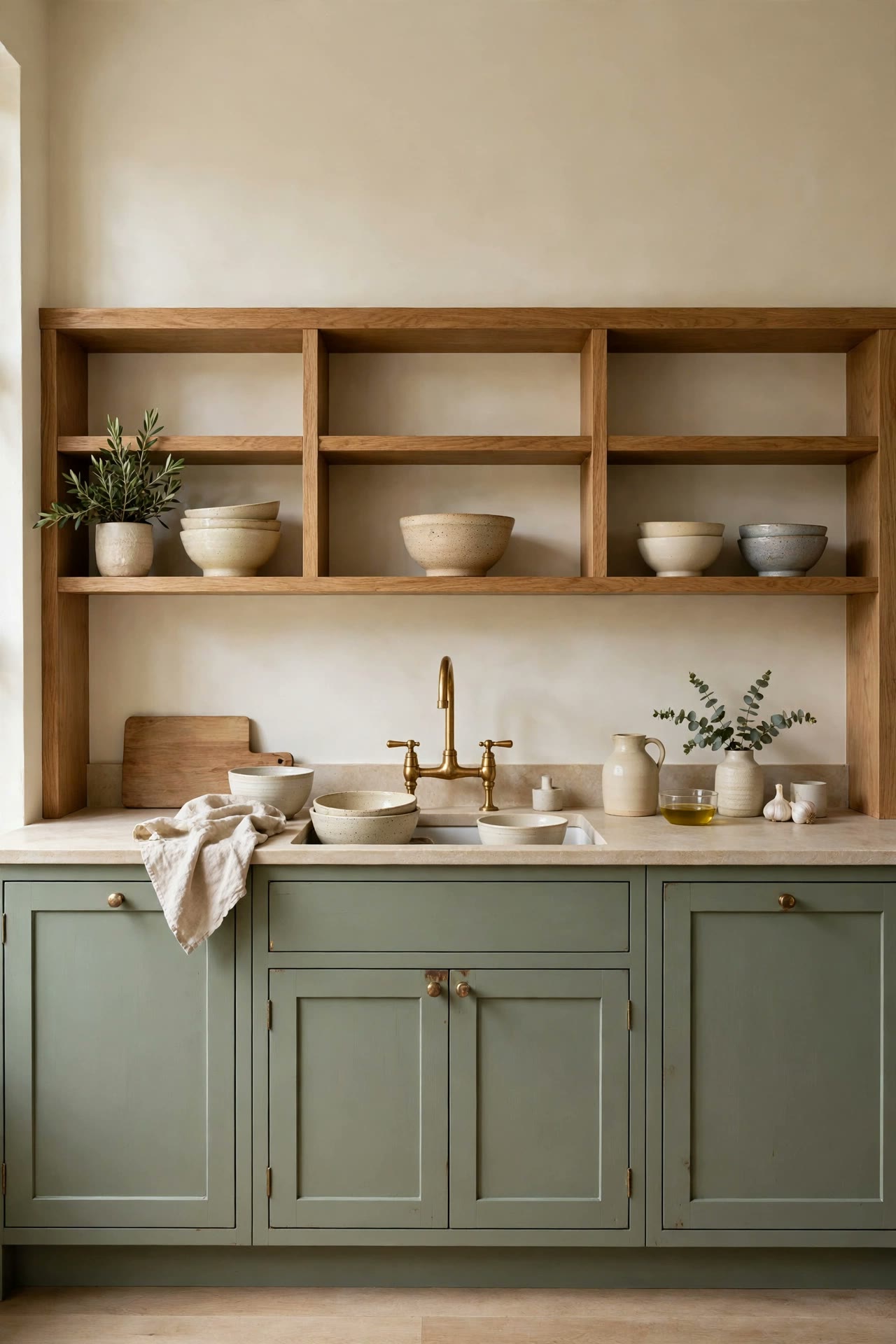

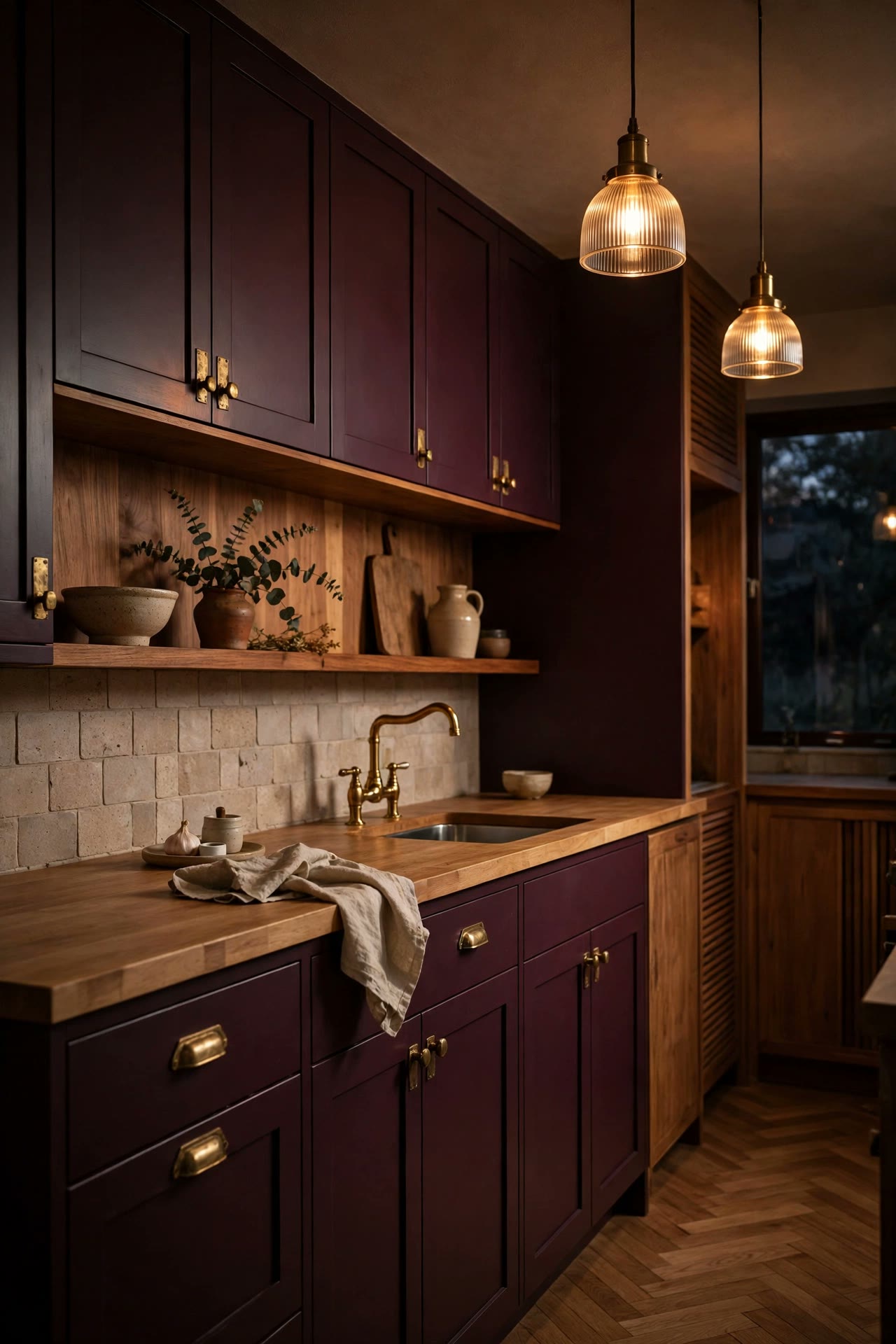
A dark kitchen is having a moment, and the aubergine kitchen is the most livable version of it. Aubergine is a deep, warm purple with brown and plum undertones, and it gives a kitchen the moody depth of a dark cottagecore room without the coldness that black or charcoal can bring. Paired with warm wood and brass, it feels rich, cozy, and a little bit magical, like a kitchen in an old house that has always been loved.
The dark-kitchen surge
Dark kitchens have surged because homeowners are tired of white boxes and want rooms with character. Deep colors make a kitchen feel intentional and personal, and they hide the wear and splashes that show up fast on white cabinets. Aubergine is the warmest of the dark kitchen colors: it has red and brown in it, so it flatters wood, brass, and the warm light of a pendant lamp, and it pairs with the natural materials of a cottagecore kitchen, like linen, pottery, and dried herbs. Aubergine also suits the way kitchens are actually used. It looks good in the evening, when most cooking happens, and it makes a small kitchen feel like a jewel box rather than a corridor. The color reads differently through the day: plum in bright light, deep brown in lamplight, almost black in a dim corner.
Paint vs replace: the budget route
A full kitchen replacement is rarely necessary to get the aubergine look, because paint does most of the work. Painting existing cabinets in a deep aubergine costs a fraction of replacing them, and it is a weekend project with the right preparation. Clean the cabinets thoroughly to remove grease, sand them lightly so the paint grips, prime with a stain-blocking primer, and apply two thin coats of cabinet-grade paint in a satin or eggshell finish. Remove the doors and hardware, paint them flat, and label everything so it goes back in the right place. If your cabinets are beyond painting, consider replacing only the doors and keeping the carcasses, which gives you a new look for much less than a full refit.
Warm wood to balance the dark
Warm wood is what keeps a dark kitchen cozy instead of cave-like. Oak, walnut, and warm pine all work against aubergine, and the wood should appear in at least two places: the worktop or the shelving, and a second touch like a stool, a chopping board, or a picture frame. Open wooden shelves break up a run of dark cabinets and give you a place to display ceramics and cookbooks, which add life to the dark wall. A wooden worktop is the warmest option, and it ages gracefully with use, developing a patina that suits a cottagecore kitchen. If wood worktops worry you, a light stone with warm veining gives the same balance and needs less care. A wooden floor, or a warm-toned tile, carries the wood tone through the room.
Brass and lighting
Brass and aubergine were made for each other. The warm gold of brass lights up the deep purple, and the combination reads as vintage and rich. Use brass for the tap, the handles, and the pendant lights, and keep the finish consistent. Unlacquered brass will patinate and deepen over time, which suits the lived-in cottagecore feeling, while lacquered brass stays bright. A brass rail for hanging copper pans or utensils adds a practical layer of brass that you use every day. Lighting matters more in a dark kitchen than in a light one, because the cabinets absorb light instead of reflecting it. Add under-cabinet lighting in a warm tone so the worktops stay bright, and hang a pendant or two over the main work area.
What to avoid in a small kitchen
In a small kitchen, dark cabinets need discipline. Avoid painting every surface dark: keep the walls light, the ceiling white, and the floor warm and mid-toned, so the aubergine stays a feature rather than a cave. Avoid a dark backsplash as well, and choose a light handmade-look tile or a warm stone that reflects light back into the room. Avoid clutter on the worktops, because a dark kitchen with crowded surfaces feels smaller than a light kitchen with the same clutter.
Avoid mixing too many metals, and keep stainless steel to the appliances only. Avoid very dark floors with dark cabinets, which merges the room into one dark block. And avoid painting the inside of glass-fronted cabinets dark, since the contents will disappear.
Concept image: AI-generated interior concept.