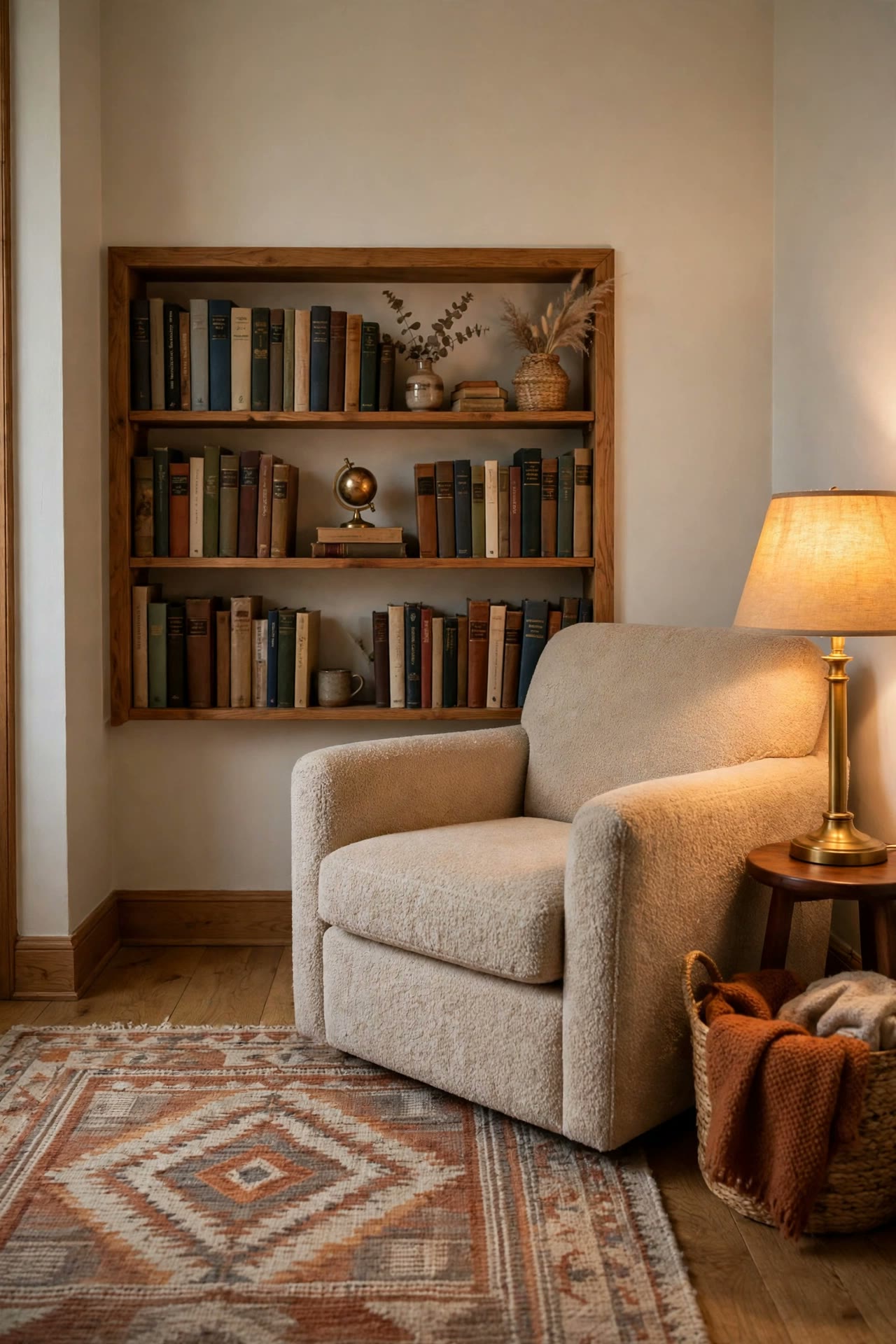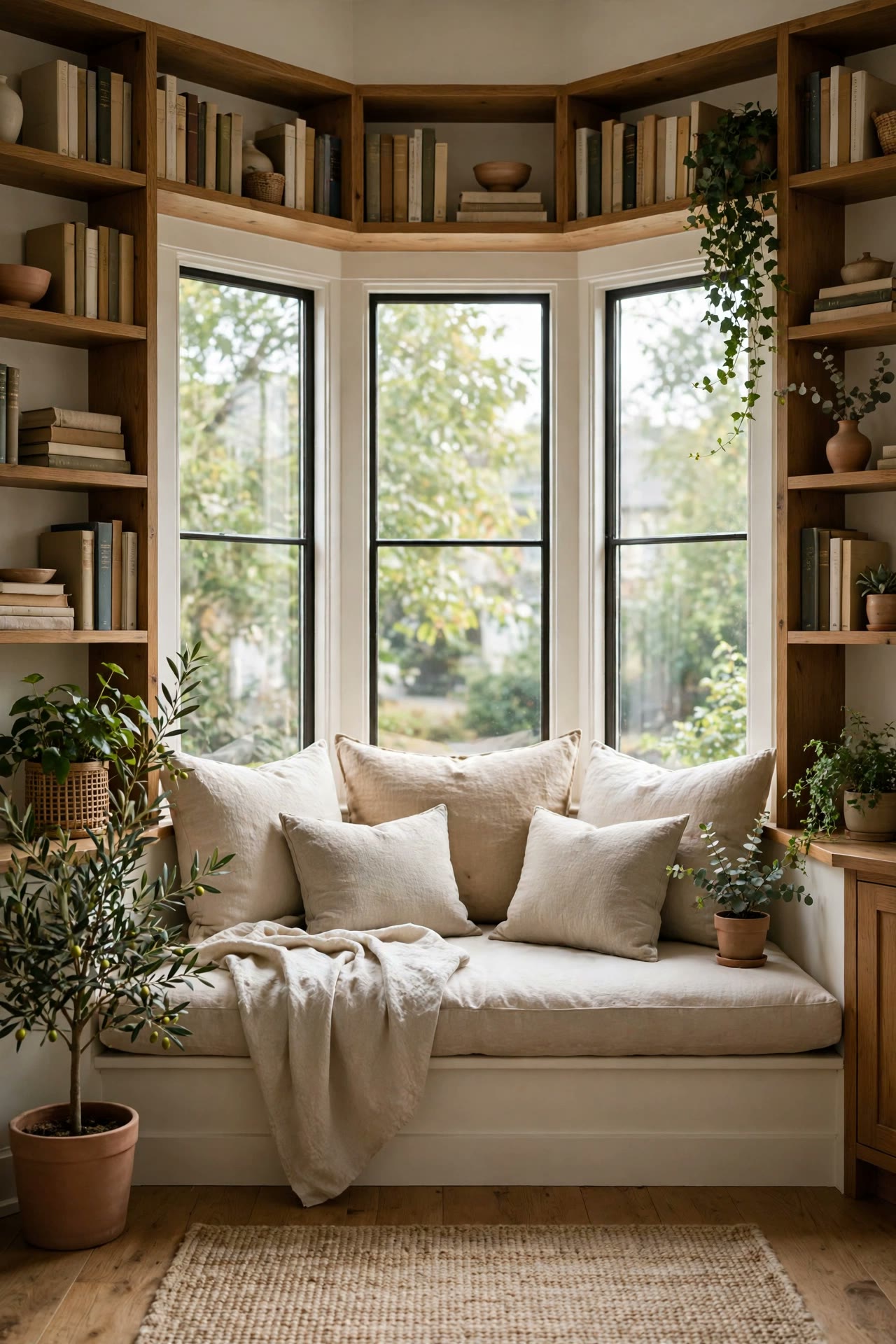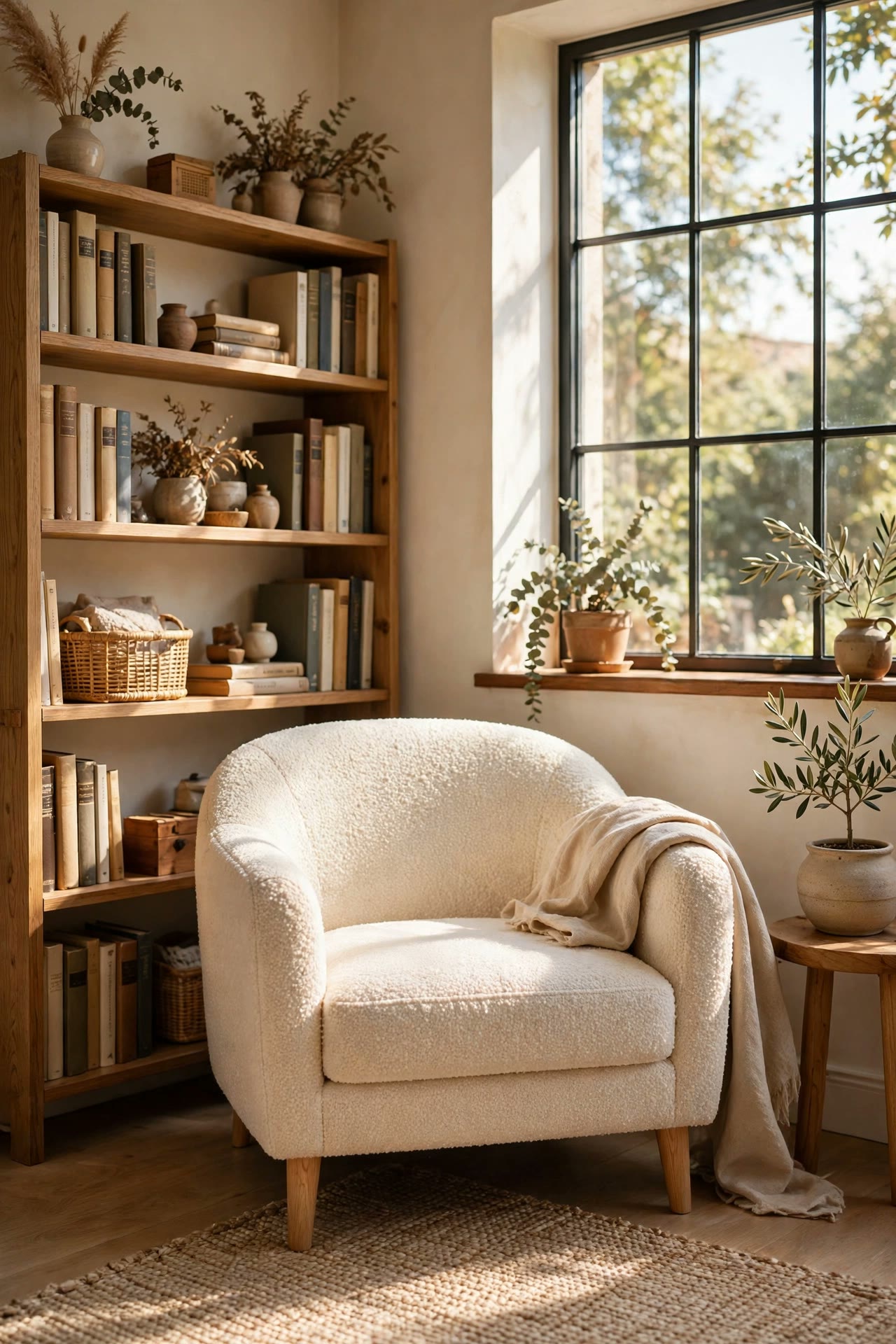

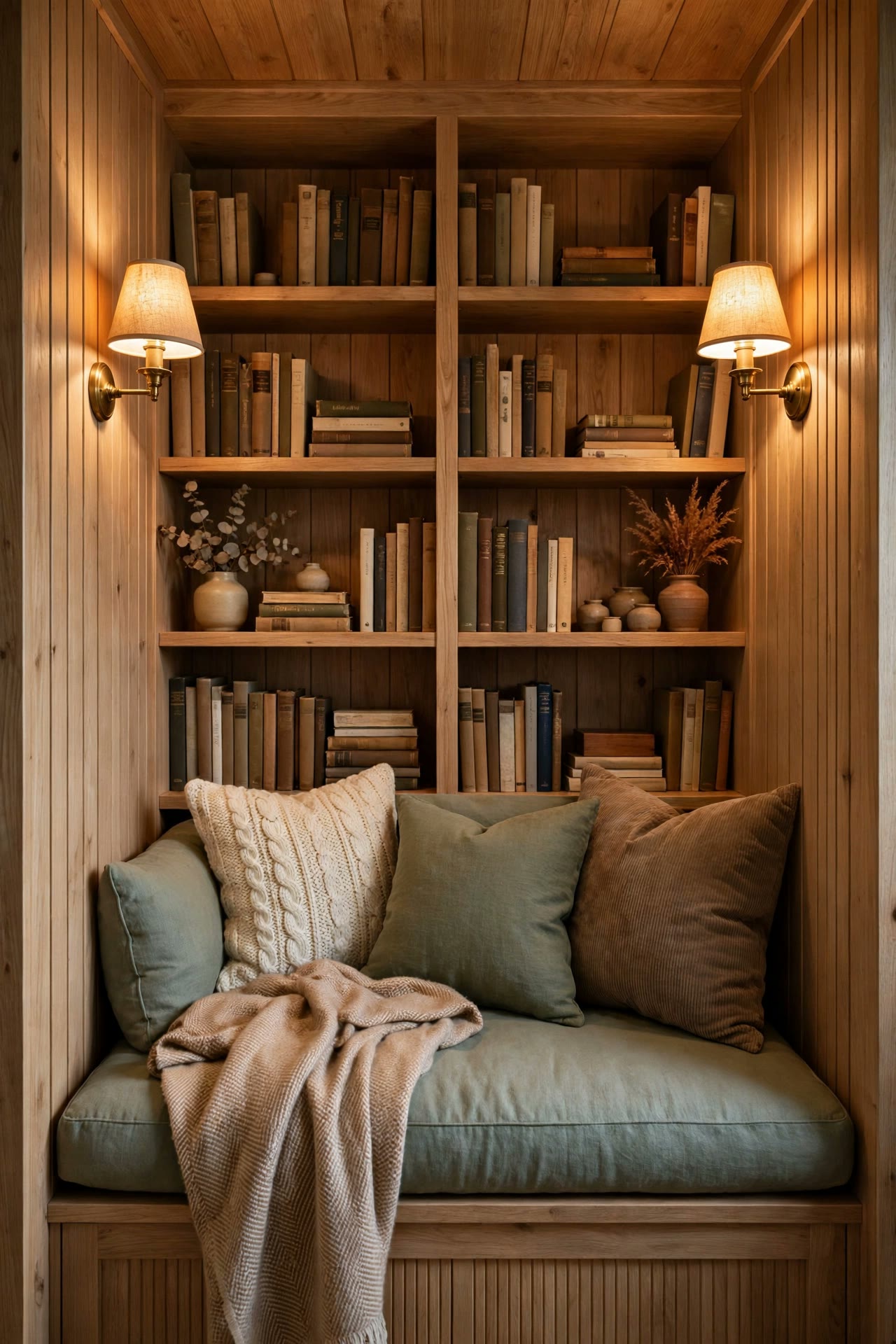
A closet reading nook for adults is one of the most satisfying small-space projects there is, because it turns dead storage into the coziest room in the house. Most bedroom closets are deep enough for a bench seat and wide enough for a person plus books, and the enclosed shape that makes a closet bad for clothes makes it wonderful for reading: quiet, sheltered, and easy to light warmly.
Which closets work
The best candidate is a reach-in closet at least 24 inches deep and 36 inches wide, with a door you can remove or leave open. Standard reach-in closets are usually 24 inches deep, which is exactly bench depth, and most are 4 to 6 feet wide, giving you a bench plus shelving on one or both sides. A closet with a sliding door works well because you can remove one panel for a permanent open nook, or keep both panels and close them when the nook is not in use. Check three things before you start. First, make sure the closet has no damp or musty smell, since books and cushions will not forgive moisture. Second, check whether there is an outlet nearby or inside the closet; if not, plan for battery or plug-in lighting with a cord run neatly along the baseboard.
Bench seat and storage build
The bench is the heart of the nook, and it is simpler than it looks. The classic build is a plywood box the full width of the closet, about 18 inches high, with a hinged or lift-off top so the space inside becomes storage for blankets, spare cushions, and books you are not reading yet. If you are not comfortable building, a low storage bench or a pair of cube storage units pushed together and topped with a cut-to-size board does the same job, and it comes apart when you move. Top the bench with a cushion at least 4 inches thick so sitting for an hour stays comfortable, and add a back cushion or a row of pillows against the wall.
Lighting that makes it cozy
Closets are dark by design, so lighting is what turns a storage box into a library. Layer two kinds of light: a warm overhead or sconce light that fills the space, and a small reading light aimed at the bench. Battery-powered LED sconces with adhesive mounts are the simplest option, and many now come with a remote and a dimmer. A plug-in picture light mounted above the shelves gives a soft wash of light that feels like a bookshop, and a clip-on reading light on a shelf edge works as a focused task light. Choose warm light, around 2700K, and avoid cool white, which makes a small enclosed space feel like an office. If the closet has a wired ceiling light, swap the bulb for a warm dimmable one.
Shelves and book storage
Shelving in a closet nook should follow the shape of the space. The back wall takes the tallest shelf arrangement, with the lowest shelf just above the back cushion so books are within arm’s reach. Side walls can hold shorter stacks, picture ledges for displaying favorite covers face-out, or a narrow shelf for a mug and a candle. Keep the shelves shallow, 8 to 10 inches deep, so books sit flush and nothing juts into your elbow room. Sort the nook’s books the way you actually read: current reads on the lowest shelf, favorites face-out on a ledge, and everything else stored in the bench. Leave one shelf deliberately empty or holding a plant or a framed photo, because a wall of books with no breathing room feels like a warehouse rather than a retreat.
Budget breakdown
A closet nook can be built at several levels. The lightest version uses what you already own: a bench cushion, pillows, a battery sconce, and a stack of books, and costs little more than the cushion. The mid-level version adds a built or bought bench box, adhesive shelves, and a plug-in light, which is a weekend project with basic tools. The full version adds painted walls, fitted shelves on three sides, hardwired lighting, and a custom cushion, which takes longer and needs either confidence with a saw or a carpenter for a day.
Save money by painting the closet interior a warm color you already have, using offcuts for shelves, and shopping secondhand for the bench cushion fabric. Spend where it touches your body: the cushion thickness, the quality of the reading light, and a rug or mat under your feet.
Concept image: AI-generated interior concept.